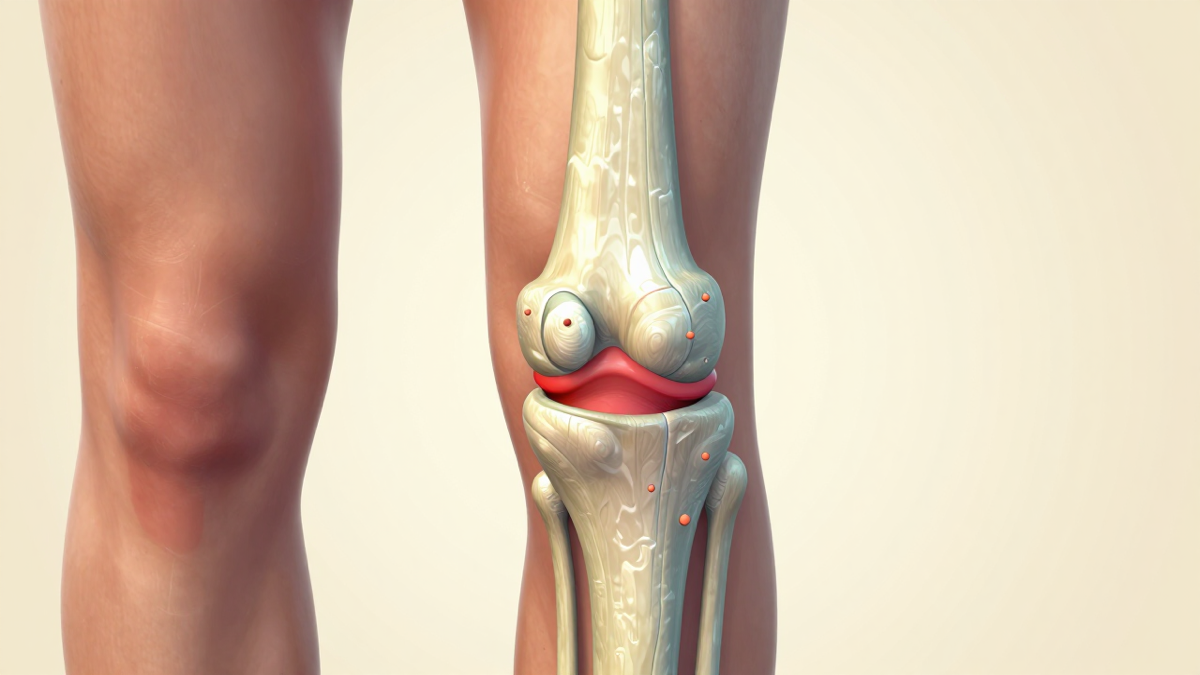
Knee osteoarthritis is the most common cause of long-term knee pain in adults over 45. The cartilage that cushions the joint thins over time. Typical signs are a deep ache that is worse after activity, stiffness for less than 30 minutes in the morning, and creaking. Doctors usually diagnose it from symptoms and an exam; X-rays are not always needed.
Stages (Kellgren-Lawrence grades on X-ray)
| Grade | What the X-ray shows |
|---|---|
| 1 | Doubtful narrowing, possible small bone spurs |
| 2 | Definite small bone spurs, possible narrowing |
| 3 | Moderate narrowing, several bone spurs |
| 4 | Severe narrowing, large spurs, bone changes |
X-ray grade and pain do not always match. Some people with grade 4 knees have little pain, and some with grade 2 have a lot.
Relief options, step by step
- Core treatment for everyone: exercise, weight loss if needed, education
- Add if needed: topical NSAID gel, short courses of tablets, brace
- Injections for flare-ups or persistent pain: cortisone; some doctors also offer hyaluronic acid, PRP or stem cell injections, which have less certain evidence
- Surgery for severe arthritis that still limits life: knee replacement
Many people want to delay or avoid replacement. Mild to moderate arthritis is where stem cell injections have been studied most. See alternatives to knee replacement.