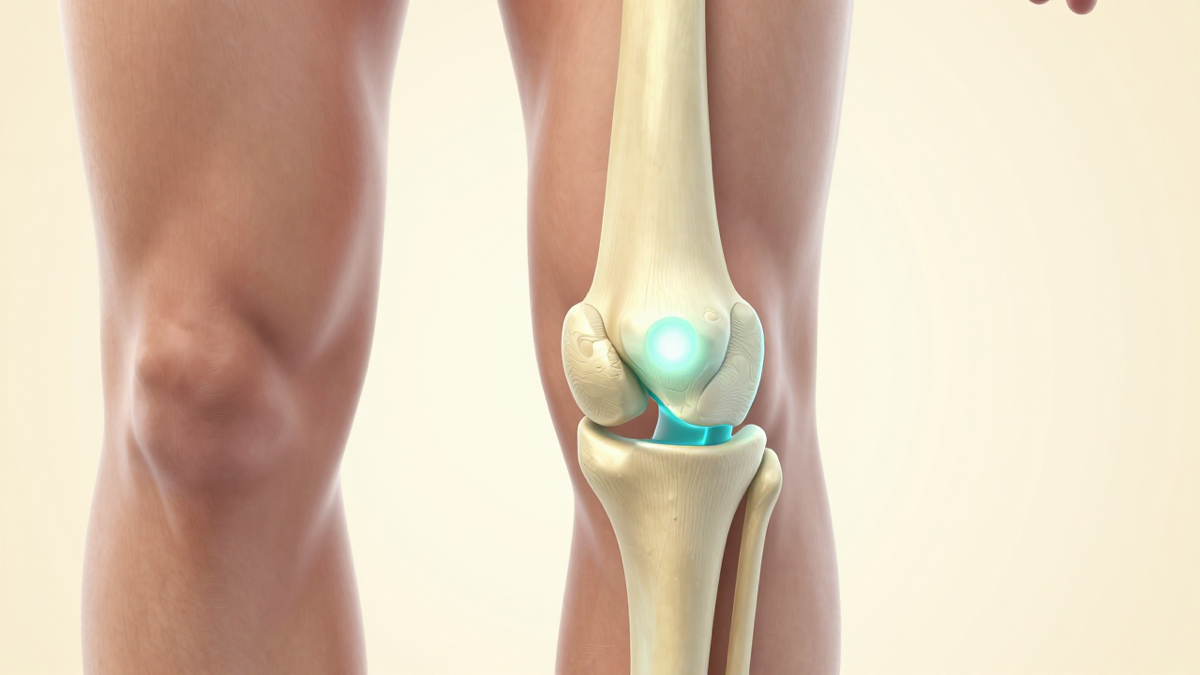
The fastest proven knee joint pain relief for most people is a mix of three things: a topical anti-inflammatory gel, ice or heat for 15 to 20 minutes, and gentle strengthening exercise every day. Long-term relief depends on the cause. Arthritis, a torn meniscus and an inflamed tendon each need a different plan.
Stem cell treatment vs knee surgery
| Knee replacement | Stem cell treatment | |
|---|---|---|
| Procedure | Joint surfaces cut away and replaced with metal and plastic, general or spinal anaesthetic | Injection into the joint, local anaesthetic, no incision |
| Hospital stay | Usually 1 to 4 days | Walk out the same day |
| Recovery | Months of rehab; full benefit can take up to a year | Light activity within days |
| Typical cost | In the US, often $30,000 to $50,000 without insurance | A fraction of the cost of surgery |
| Aim | Replace the joint | Calm inflammation and support your own cartilage |
Our partner clinic in Bangkok has treated more than 1,000 patients with regenerative medicine. A doctor reviews your X-ray or MRI free and recommends the treatment that is right for you, which for many people is stem cell treatment instead of surgery. Get your free assessment.
Knee pain for more than 3 months? Get the free relief guide or send your knee MRI on WhatsApp for a free doctor review.
Told you need knee surgery?
Surgery is not the only path for many knees. Before agreeing to an operation, many people first try strengthening, weight loss and injections. Some choose stem cell injections, which published studies suggest could ease pain and help some people delay surgery. Whether it could suit your knee is a doctor's decision after seeing your MRI. See alternatives to knee replacement.
Fast relief: what you can do today
- Rest the knee from what hurts, not from all movement. Short walks keep the joint moving. Running, jumping and deep squats can wait.
- Ice for a hot, swollen knee. Heat for a stiff, aching knee. 15 to 20 minutes, a cloth between skin and pack. See ice or heat.
- Anti-inflammatory gel on the knee. UK guidelines (NICE) put topical NSAIDs first for knee osteoarthritis. See gels and tablets.
- Raise the leg above hip level when the knee is swollen.
Long-term relief: what works over weeks
- Strengthening exercise is the treatment every major guideline recommends for knee osteoarthritis. See knee pain exercises.
- Losing weight if you carry extra. Research found each pound lost takes about four pounds of load off the knee per step. See weight and knee pain.
- A brace or insoles for some knees. See braces and supports.
Knee pain for more than 3 months? Get the free relief guide or send your knee MRI on WhatsApp for a free doctor review.
When home relief is not enough
If pain lasts more than a few months despite exercise and weight loss, a doctor may suggest injections: cortisone, hyaluronic acid, PRP or stem cells. Each has a different level of evidence. Compare them in our evidence table.
Find your cause
Where and when it hurts gives a strong clue:
| Where / when it hurts | Common cause |
|---|---|
| Deep ache, worse after rest, stiff in the morning, age 45+ | Knee arthritis |
| Inner or outer side, catching or locking after a twist | Meniscus tear |
| Around or behind the kneecap, worse on stairs | Runner's knee |
| Sudden hot, red, very painful knee | Gout or infection: see a doctor today |
| Swelling at the back of the knee | Pain behind the knee |
Go to a doctor or emergency room now if the knee is hot and red with a fever, you cannot put weight on it, it looks deformed, or the calf is swollen and tender. See when to see a doctor.
Knee arthritis treatment, step by step
Osteoarthritis of the knee joint is the most common reason adults search for knee pain relief. Guidelines from NICE (UK), AAOS (US) and OARSI agree on the order of osteoarthritis knee treatment: 1. Education, exercise and weight control for everyone with knee osteoarthritis 2. Topical NSAID gel, then short courses of tablets if needed 3. Supports: a brace, walking aid or better footwear 4. Injections when pain persists: cortisone for short-term relief; stem cell or PRP knee injections as minimally invasive alternatives to surgery 5. Knee replacement for severe arthritis that still limits daily life
Most people never need step 5. See the full knee arthritis guide and the evidence table.
Symptoms of an arthritic knee
The typical symptoms of osteoarthritis in the knee are:
- A deep, aching pain that is worse after walking, stairs or standing
- Morning stiffness that eases within about 30 minutes (why)
- Creaking or grinding (crepitus) when you bend the knee
- Swelling after activity
- A knee that feels weak or gives way
- Less bend or straightening than before
Stiffness lasting more than an hour, or swelling in several joints, can mean inflammatory arthritis and needs a doctor's check. See when to see a doctor.
Physical therapy for arthritic knees
Physical therapy for knee osteoarthritis is the most recommended treatment in every major guideline. A physiotherapist builds strength in the thigh and hip, improves balance and teaches you how to load the knee without flaring it. Most people notice change in 6 to 12 weeks. Physical therapy also helps knee crepitus and many cases of bone-on-bone knee pain. Start with our 7 home exercises or read what physiotherapy involves.
Natural relief for knee pain
Natural treatment for knee joint pain works best as a combination:
- Movement: daily walking, cycling or swimming
- Strength: bridges, leg raises and wall sits
- Weight: each pound lost removes about four pounds of load per step (weight and knee pain)
- Heat and ice: heat for stiffness, ice for swelling (which to use)
- Sleep position: a pillow between or under the knees (sleep tips)
- Supplements: turmeric has some small positive trials; glucosamine mostly does not (evidence)
Relief for bone-on-bone knee pain
"Bone on bone" means the cartilage in part of the knee has worn very thin on X-ray. It does not always mean you need a knee replacement straight away. Pain relief for bone-on-bone knee pain usually combines physical therapy, weight loss, an unloader brace and pain relief gel. Cortisone can calm flare-ups. Some people with advanced but not end-stage arthritis also ask about PRP or stem cell knee injections to delay surgery; how well these could work depends on how much cartilage is left, which a doctor judges from your scan.
New treatments for osteoarthritis of the knee
The newest options doctors and researchers are looking at include:
- PRP (platelet-rich plasma): growth factors from your own blood. Several trials found more relief than hyaluronic acid at 6 to 12 months; others found no clear benefit (PRP guide).
- Stem cell knee injections: mesenchymal cells from fat, bone marrow or donor tissue. Randomised trials from Korea, China and India describe less pain, better function and, in some, better cartilage on MRI (what studies show).
- Knee cartilage regeneration research: scaffolds, cell implants and injections that aim to repair cartilage. Most are still in trials.
- Genicular nerve treatments: blocking or ablating the small pain nerves around the knee, used in some countries for people who cannot have surgery.
These are the latest alternatives to knee replacement that people ask about most. None is a guaranteed fix, and suitability depends on your knee. See alternatives to knee replacement.
Coming from abroad for regenerative knee treatment?
Many patients fly to Bangkok for stem cell or PRP knee treatment. Read the guide for your country: Australia, UK, USA, Canada, New Zealand, Singapore, UAE, Hong Kong.
Questions? See our knee pain FAQ.